Say hello to
Jip Kuijper (they/them)
+316 83 12 73 32
jip@bo-diversity.com
The pronouns she/her and he/him have been part of our everyday language for a long time. However, more and more people no longer feel comfortable with these pronouns. They may prefer they/them or a combination of pronouns.
If you want to play the quizzes from Pro-Now, you will come across a variety of pronouns. This is because not all gender-diverse people use the same pronouns: it differs from person to person. In the quiz, you will encounter neutral, mixed, and binary pronouns.
Neutral pronouns are pronouns that are not specifically male or female. Unlike binary pronouns like he/him and she/her, they are not tied to the traditional gender binary. Many non-binary, intersex, and gender-diverse people use neutral pronouns because they feel more accurate and comfortable for their identity. A neutral pronoun is they/them. They/them pronouns have existed in English for centuries and are widely used when someone’s gender is unknown. Today, it is also an important way to respect and affirm people’s gender identities.
Double pronouns are combinations of two pronoun sets, such as they/she or he/they. Someone may enjoy hearing both because they do not fully identify with one or the other. It can also mean that one pronoun is acceptable in certain contexts — for example, he/him for people who do not know the person well — while they/them is preferred among trusted friends and family.
If you meet people who introduce themselves with a different order, for example they/she instead of she/they, this is often because they prefer the first pronoun more strongly. For instance, people may naturally tend to default to she/her, while the person would appreciate others consciously using the full combination instead.
Binary pronouns refer to the traditional distinction between male (he/him) and female (she/her). These are the pronouns most people are already familiar with. People can also switch between binary pronouns, which we often see with binary trans people, such as trans men and trans women.
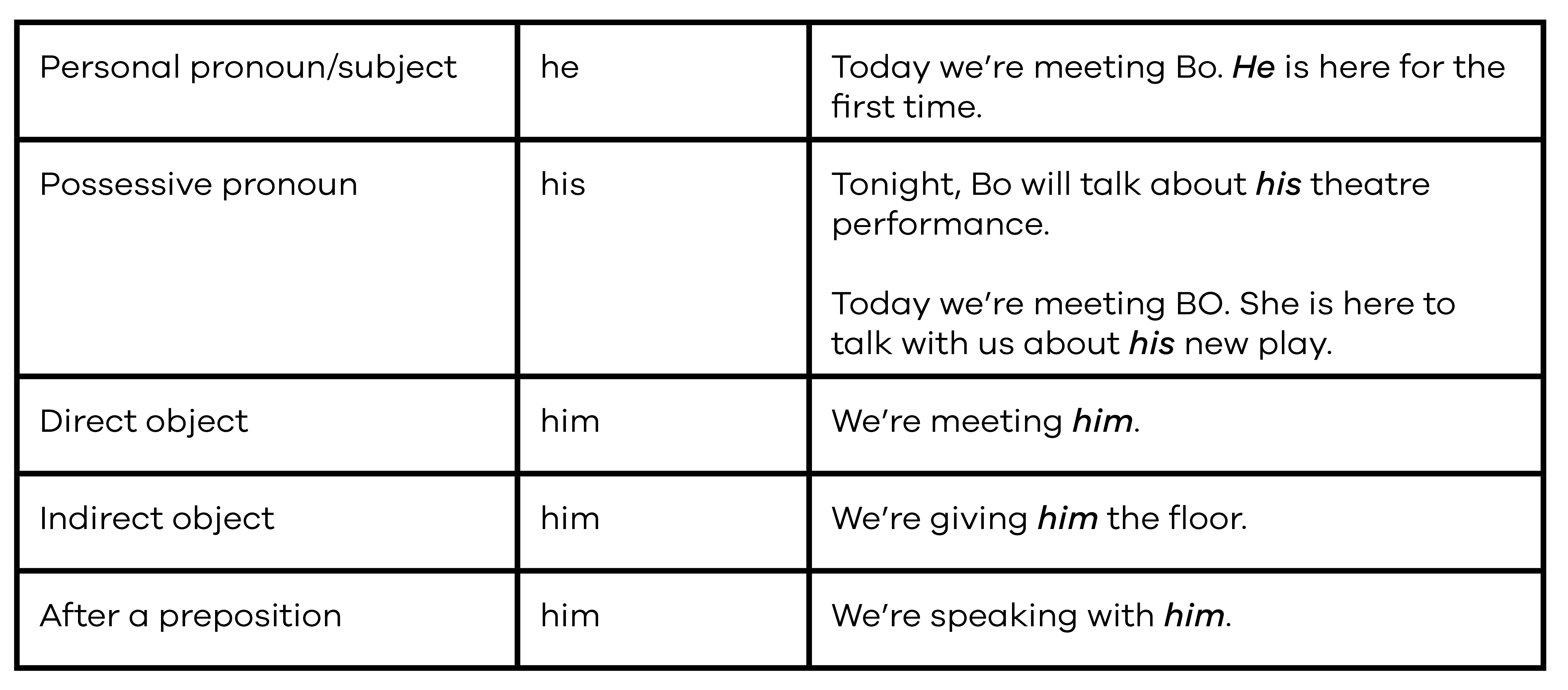
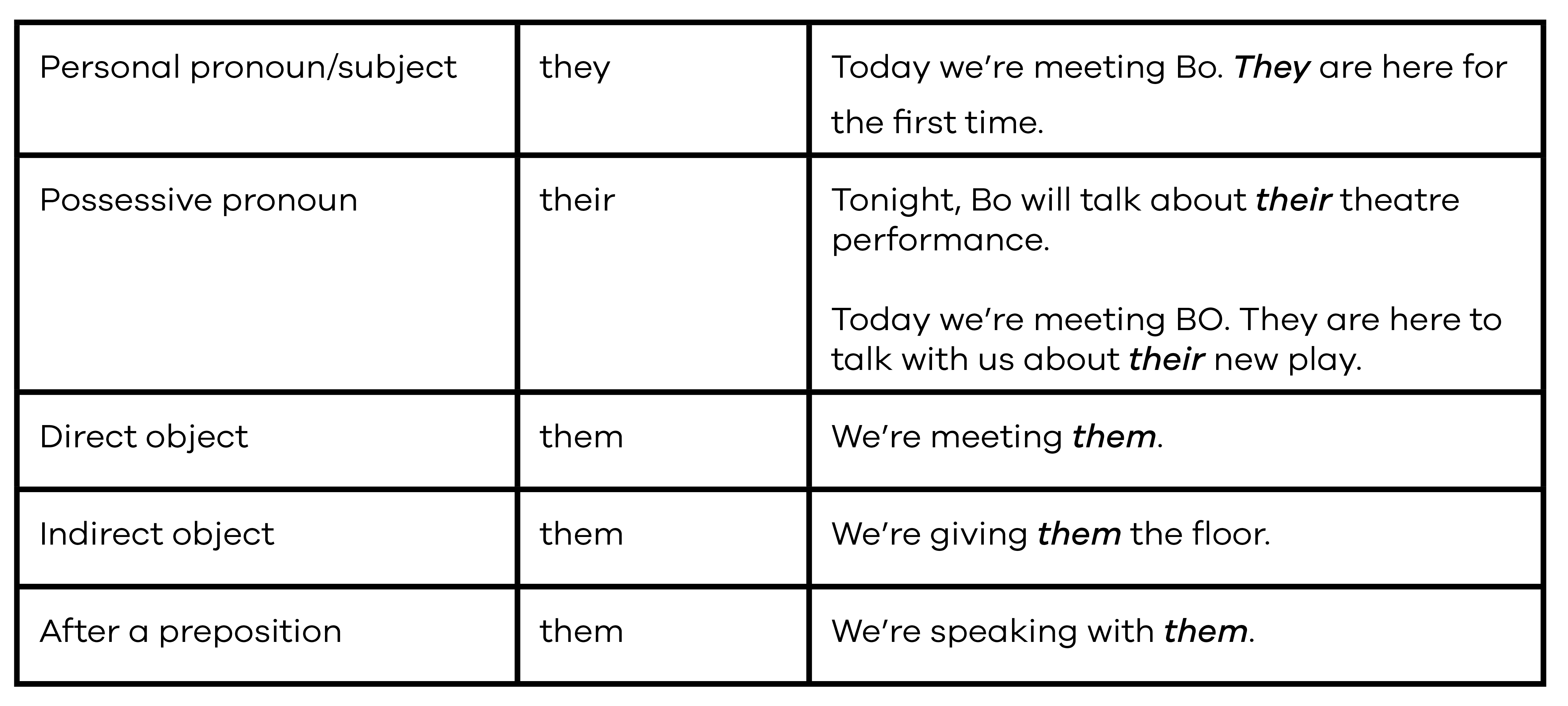
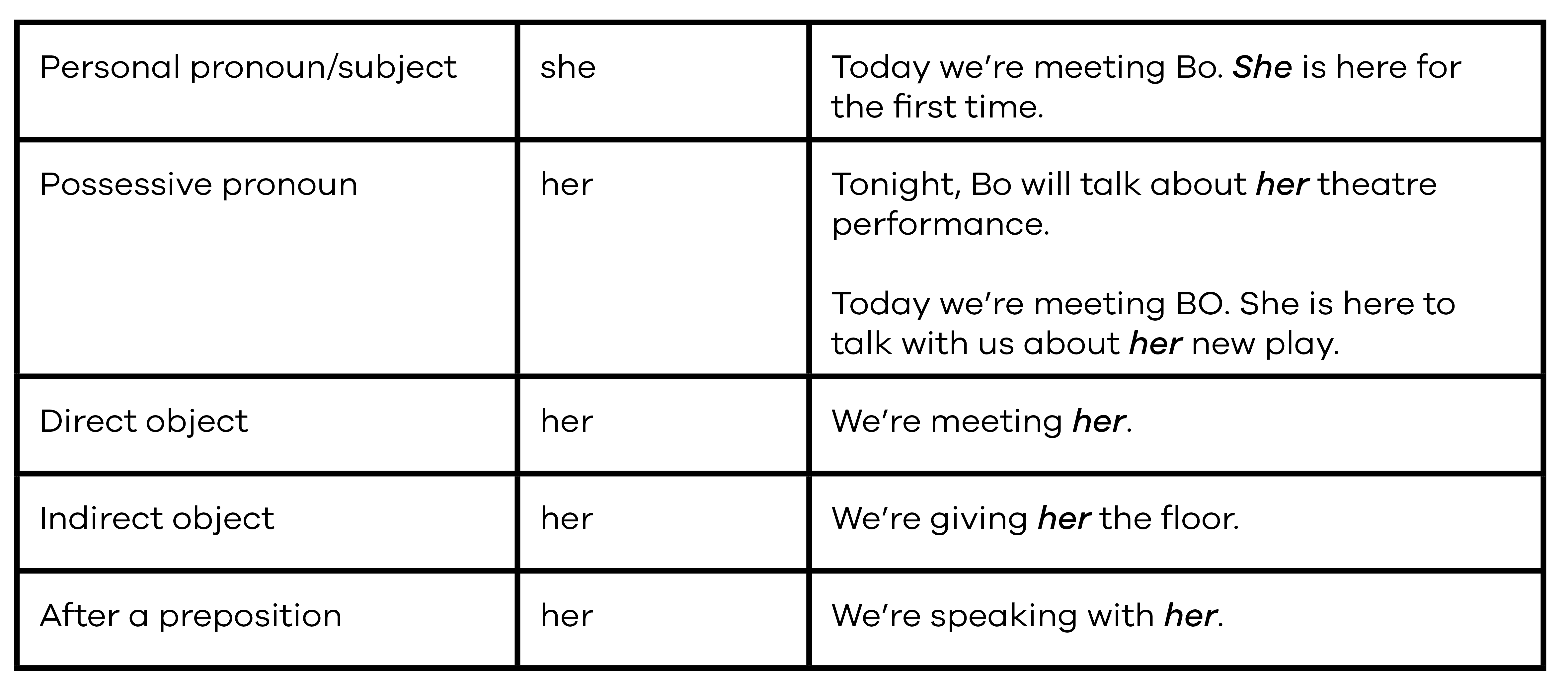
But when do you use which pronoun? When do you use them versus their? And when do you use she versus her? We’ll explain it for you below!
When someone uses they/them pronouns.
When someone uses she/her pronouns.
When someone uses he/him pronouns.